- English
- French
- German
- Portuguese
- Spanish
- Russian
- Japanese
- Korean
- Arabic
- Greek
- German
- Turkish
- Italian
- Danish
- Romanian
- Indonesian
- Czech
- Afrikaans
- Swedish
- Polish
- Basque
- Catalan
- Esperanto
- Hindi
- Lao
- Albanian
- Amharic
- Armenian
- Azerbaijani
- Belarusian
- Bengali
- Bosnian
- Bulgarian
- Cebuano
- Chichewa
- Corsican
- Croatian
- Dutch
- Estonian
- Filipino
- Finnish
- Frisian
- Galician
- Georgian
- Gujarati
- Haitian
- Hausa
- Hawaiian
- Hebrew
- Hmong
- Hungarian
- Icelandic
- Igbo
- Javanese
- Kannada
- Kazakh
- Khmer
- Kurdish
- Kyrgyz
- Latin
- Latvian
- Lithuanian
- Luxembou..
- Macedonian
- Malagasy
- Malay
- Malayalam
- Maltese
- Maori
- Marathi
- Mongolian
- Burmese
- Nepali
- Norwegian
- Pashto
- Persian
- Punjabi
- Serbian
- Sesotho
- Sinhala
- Slovak
- Slovenian
- Somali
- Samoan
- Scots Gaelic
- Shona
- Sindhi
- Sundanese
- Swahili
- Tajik
- Tamil
- Telugu
- Thai
- Ukrainian
- Urdu
- Uzbek
- Vietnamese
- Welsh
- Xhosa
- Yiddish
- Yoruba
- Zulu
ASME B16.21 and EN 1514-1 Standards for Nonmetallic flat gaskets: Key Dimensions and Tolerances
Aug 26 2026
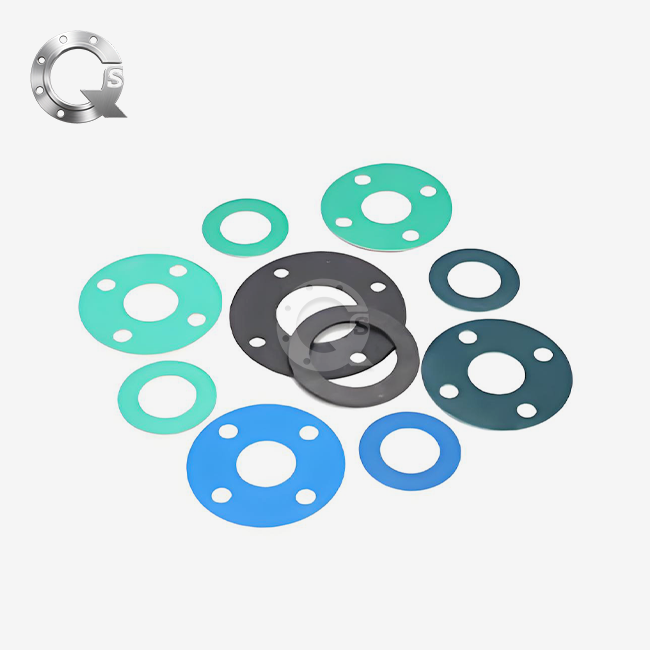
Nonmetallic flat gaskets are fundamental components in the piping industry, serving as the primary sealing element for a vast array of low-to-medium pressure applications. Whether dealing with water treatment, chemical processing, or HVAC systems, the integrity of a flanged connection often relies on the precise manufacturing of these soft gaskets. While the materials—ranging from rubber and compressed non-asbestos fiber to PTFE—are critical, it is the adherence to dimensional standards that ensures the gasket fits the flange correctly and maintains a seal under operating conditions. This technical guide explores the two most influential standards governing these components: the American ASME B16.21 and the European EN 1514-1.
The Critical Role of Dimensional Standardization
In the world of industrial sealing, interchangeability is key. A gasket manufactured in one part of the world must fit a flange manufactured in another. Without standardized dimensions for inside diameter (ID), outside diameter (OD), and thickness, the risk of installation failure increases dramatically. If a gasket is too small, it may blow out under pressure; if it is too large, it may protrude into the pipe flow, causing turbulence or contamination.
The standardization of Nonmetallic flat gaskets ensures that engineers can specify a gasket based on the Nominal Pipe Size (NPS) and pressure class, confident that the component will align perfectly with the bolt holes and sealing faces of the flange. This is where ASME B16.21 and EN 1514-1 come into play, providing the necessary blueprints for global compatibility.
ASME B16.21: The North American Benchmark
The ASME B16.21 standard, published by the American Society of Mechanical Engineers, covers the types, sizes, materials, dimensions, tolerances, and markings for Nonmetallic flat gaskets. It is the go-to standard for piping systems designed according to ASME B16.5 (Pipe Flanges and Flanged Fittings).
Scope and Application
ASME B16.21 is specifically designed for use with ASME flanges. It dictates the dimensions required to ensure that the gasket covers the raised face or fills the flat face of the flange appropriately. The standard applies to gaskets made from materials such as rubber, compressed fiber, and PTFE, which are dimensionally suitable for use with flanges described in referenced flange standards.
Key Dimensions: Inside and Outside Diameter
Under ASME B16.21, the dimensions of the gasket are determined by the Nominal Pipe Size (NPS) and the flange pressure class (e.g., Class 150, 300, 400, 600, 900, 1500, and 2500).
· Inside Diameter (ID): The ID is generally sized to match the inside diameter of the corresponding flange. This ensures a smooth flow path and minimizes erosion of the gasket material.
· Outside Diameter (OD): The OD is critical for centering the gasket. For raised face flanges, the gasket OD is designed to fit within the raised face or extend slightly to the bolts, depending on the class. For Class 150 and Class 300 flanges, the gasket usually extends to the inside of the bolt circle.
Thickness and Tolerances
Thickness is a major variable in soft gaskets. ASME B16.21 specifies standard thicknesses, typically ranging from 1/16 inch (1.6 mm) to 1/8 inch (3.2 mm) and thicker for specific applications.
· Tolerances: The standard places strict limits on thickness tolerances to ensure uniform compression. Uneven thickness can lead to "soft spots" in the flange connection, resulting in leaks.
· Concentricity: The standard also addresses the concentricity of the ID and OD, ensuring the gasket is centered and the bolt holes (if applicable) align perfectly.
EN 1514-1: The European Standard for Flange Gaskets
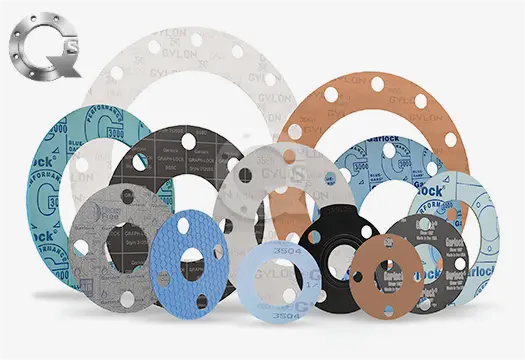
While ASME dominates in North America and parts of Asia, the EN 1514 series is the prevailing standard in Europe and many other international markets. EN 1514-1 specifically details the dimensions of non-metallic flat gaskets for PN-designated flanges (PN 2.5 to PN 400).
PN Designation vs. Class Designation
The most significant difference between the two standards is the pressure designation. EN 1514-1 uses "PN" (Pressure Nominal) measured in bars, whereas ASME uses "Class" measured in pounds.
· Common PN Ratings: PN 6, PN 10, PN 16, PN 25, PN 40, PN 63, PN 100, PN 160, PN 250, PN 320, and PN 400.
· Compatibility: A gasket manufactured to EN 1514-1 is designed to fit flanges standardized under EN 1092-1.
Gasket Types and Dimensions
EN 1514-1 categorizes gaskets by type, which dictates their dimensions:
· Type A (Full Face): These gaskets cover the entire face of the flange and have holes for the bolts. They are typically used with flat face flanges. The dimensions must align perfectly with the bolt circle diameter.
· Type B (Inside Bolt Circle): These are the most common type, similar to the standard ASME raised face gasket. They fit inside the bolt circle and are used with raised face flanges.
· Type C (Centring Ring): Used for specific alignment purposes.
· Type D (Centring Ring with Spigot): Includes a spigot to help center the gasket on the flange face.
· Type E (Spigot): A ring used to fill the gap between the flange faces.
Dimensional Tolerances
EN 1514-1 provides a comprehensive table of tolerances for ID, OD, and thickness. The tolerances are often tighter for Type B gaskets compared to Type A, reflecting the critical nature of the sealing surface on raised face flanges. The standard ensures that the gasket OD is sufficient to cover the serrations on the flange face, preventing leak paths.
Comparative Analysis: ASME B16.21 vs. EN 1514-1
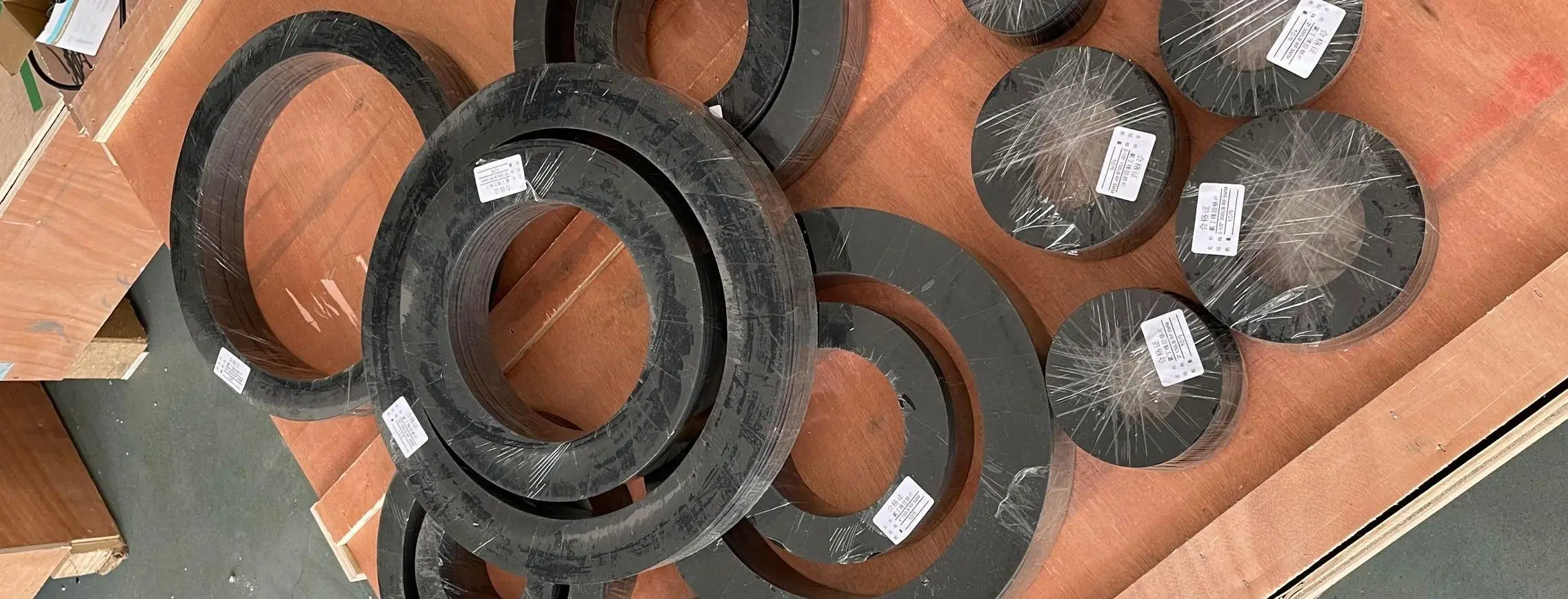
Understanding the differences between these two standards is vital for global procurement and engineering.
Bolt Hole Alignment
One of the most practical differences lies in the bolt hole alignment. ASME B16.21 gaskets are designed for ASME bolt patterns, which differ from the EN bolt patterns defined in EN 1092-1. For example, a 4-inch Class 150 flange (ASME) has a different bolt circle diameter and number of bolts compared to a DN100 PN16 flange (EN). Consequently, a full-face gasket (Type A in EN, or a full-face option in ASME) from one standard will not fit the flange of the other.
Face Types and Gasket Geometry
· ASME Approach: Tends to focus heavily on the "Inside Bolt Circle" gasket for raised face flanges. Full-face gaskets are less common in high-pressure ASME applications but are available for lower classes.
· EN Approach: Explicitly defines different geometries (Types A, B, C, D, E) to handle various flange configurations, including tongue and groove or male and female faces, although flat gaskets are primarily used for Type A and B configurations.
Material Thickness
While both standards accommodate similar materials, the preferred thicknesses can vary by region. In the US, 1/16" and 1/8" are standard. In Europe, metric equivalents like 1.5mm, 2mm, and 3mm are standard under EN 1514-1. When converting between standards, it is crucial to ensure the compressed thickness of the gasket is sufficient to maintain the seal.
Material Considerations within Dimensional Standards
While ASME B16.21 and EN 1514-1 focus on dimensions, the material selected affects the achievable tolerances and the final performance of the Nonmetallic flat gaskets.
Compressed Non-Asbestos Fiber (CNAF)
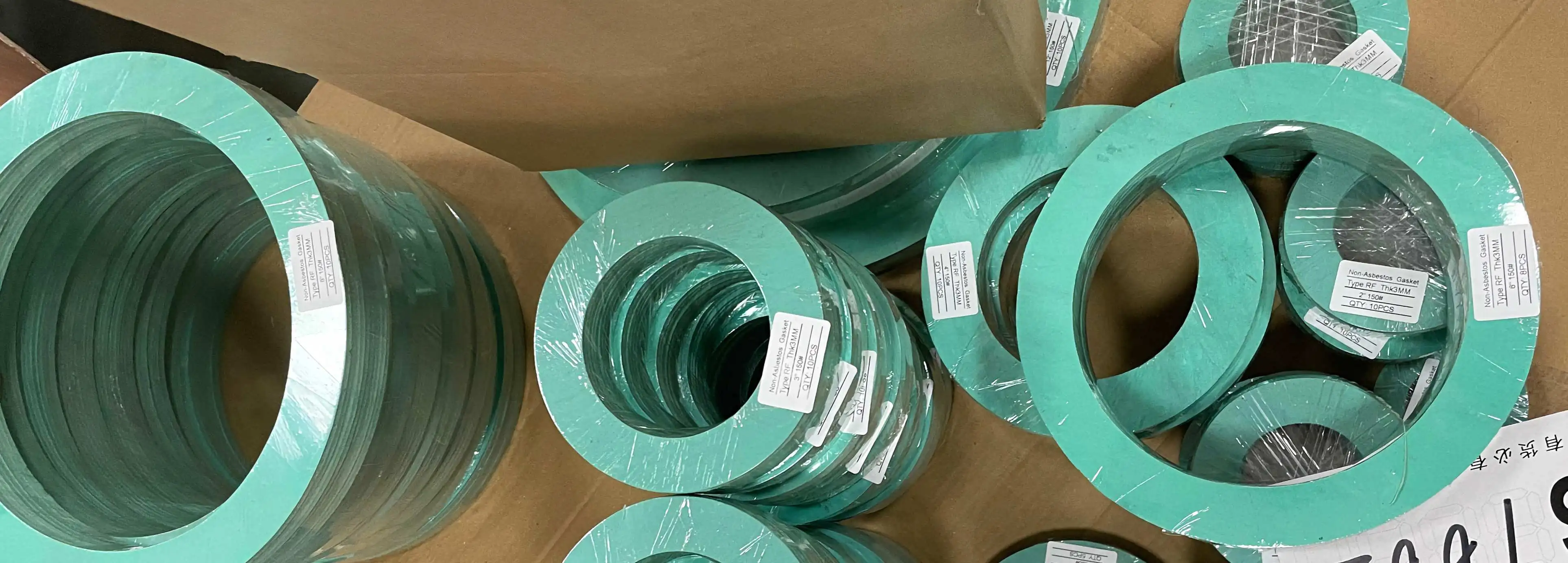
This is the industry standard for general service. CNAF gaskets are robust and can be cut to precise dimensions required by both ASME and EN standards. They maintain their thickness well under compression, adhering to the tolerances set by the standards.
PTFE (Polytetrafluoroethylene)
PTFE is known for its "cold flow" or creep. While dimensional standards apply, engineers must account for the material's tendency to deform over time. Expanded PTFE (ePTFE) is often used to mitigate this, offering better dimensional stability for soft gaskets.
Rubber and Elastomers
Rubber gaskets (NBR, EPDM, Viton) are highly elastic. The dimensional tolerances for ID and OD are critical here because the material stretches. An ID that is too small can tear during installation, while an ID that is too large can buckle. Both ASME B16.21 and EN 1514-1 account for this by specifying appropriate clearances.
FAQs
Q1: Can I use an ASME B16.21 gasket on an EN 1092-1 flange?
A1: Generally, no. While the pipe outside diameter might be similar, the flange outside diameters and bolt circle dimensions often differ between ASME and EN standards. You must match the gasket standard to the flange standard to ensure proper fit and sealing.
Q2: What is the standard thickness for Nonmetallic flat gaskets?
A2: For ASME B16.21, the most common thicknesses are 1/16" (1.6mm) and 1/8" (3.2mm). For EN 1514-1, standard metric thicknesses are typically 1.5mm, 2.0mm, and 3.0mm.
Q3: Do these standards cover spiral wound gaskets?
A3: No. ASME B16.21 and EN 1514-1 are specific to Nonmetallic flat gaskets. Spiral wound gaskets are covered under ASME B16.20 and EN 1514-7.
Q4: How do I determine the correct ID and OD for a custom application?
A4: If not following a standard, the ID should match the flange ID to prevent flow restriction, and the OD should extend to the inside of the bolt holes (for raised face) or cover the full face (for flat face), ensuring full coverage of the serrations.
Q5: Are full-face gaskets available in ASME B16.21?
A5: Yes, full-face gaskets are available, particularly for Class 125 and Class 250 cast iron flanges, and Class 150 and Class 300 steel flanges, though inside bolt circle gaskets are more common for steel flanges.
Contact QinSteel for Expert Nonmetallic flat gaskets Solutions
Navigating the complexities of ASME B16.21 and EN 1514-1 requires precision and expertise. Whether you require standard dimension Nonmetallic flat gaskets or custom-cut solutions for a specific project, quality assurance is non-negotiable. At QinSteel, we specialize in providing high-performance sealing solutions that meet international standards.
Our team understands the nuances of flange compatibility, material selection, and dimensional tolerances. We are ready to assist you with quotes, technical data sheets, and logistical support to ensure your piping systems remain leak-free and efficient.
Email us today at: info@sxqinsteel.com
References
1. ASME B16.21-2021: Nonmetallic flat gaskets for Pipe Flanges. American Society of Mechanical Engineers.
2. EN 1514-1:2015: Flanges and their joints - Dimensions of gaskets for PN-designated flanges - Part 1: Non-metallic flat gaskets with or without inserts. European Committee for Standardization.
3. ASME B16.5-2020: Pipe Flanges and Flanged Fittings. American Society of Mechanical Engineers.
4. EN 1092-1:2018: Flanges and their joints - Circular flanges for pipes, valves, fittings and accessories, PN designated - Part 1: Steel flanges. European Committee for Standardization.
5. European Sealing Association (ESA). "Guidelines for Safe Seal Usage - Flanges and Gaskets."
Learn about our latest products and discounts through SMS or email