- English
- French
- German
- Portuguese
- Spanish
- Russian
- Japanese
- Korean
- Arabic
- Greek
- German
- Turkish
- Italian
- Danish
- Romanian
- Indonesian
- Czech
- Afrikaans
- Swedish
- Polish
- Basque
- Catalan
- Esperanto
- Hindi
- Lao
- Albanian
- Amharic
- Armenian
- Azerbaijani
- Belarusian
- Bengali
- Bosnian
- Bulgarian
- Cebuano
- Chichewa
- Corsican
- Croatian
- Dutch
- Estonian
- Filipino
- Finnish
- Frisian
- Galician
- Georgian
- Gujarati
- Haitian
- Hausa
- Hawaiian
- Hebrew
- Hmong
- Hungarian
- Icelandic
- Igbo
- Javanese
- Kannada
- Kazakh
- Khmer
- Kurdish
- Kyrgyz
- Latin
- Latvian
- Lithuanian
- Luxembou..
- Macedonian
- Malagasy
- Malay
- Malayalam
- Maltese
- Maori
- Marathi
- Mongolian
- Burmese
- Nepali
- Norwegian
- Pashto
- Persian
- Punjabi
- Serbian
- Sesotho
- Sinhala
- Slovak
- Slovenian
- Somali
- Samoan
- Scots Gaelic
- Shona
- Sindhi
- Sundanese
- Swahili
- Tajik
- Tamil
- Telugu
- Thai
- Ukrainian
- Urdu
- Uzbek
- Vietnamese
- Welsh
- Xhosa
- Yiddish
- Yoruba
- Zulu
Carbon Steel Material Nut: Complete Guide to Available Steel Grades & Applications
Aug 24 2026
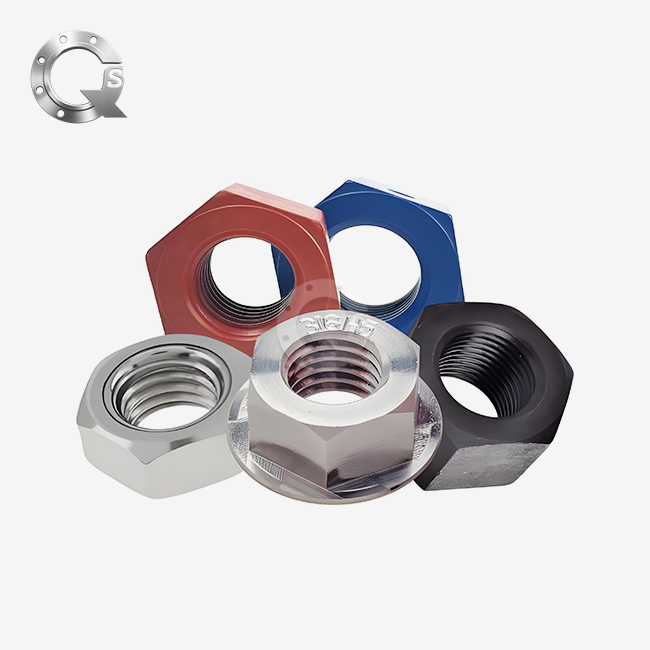
Carbon Steel Material Nut is one of the most widely used fastener components in industrial manufacturing, construction, mechanical assembly, and infrastructure engineering worldwide. Renowned for its exceptional mechanical stability, cost-effectiveness, and versatile adaptability, this type of steel fastener dominates global fastener markets and serves as a foundational connecting part for countless engineering projects. Many buyers and engineers often wonder about the specific material options and grade classifications of carbon steel fastening nuts, as different steel compositions directly determine product performance, service life, and application scenarios. This article comprehensively sorts out all mainstream material types of such industrial fasteners, elaborates on their performance characteristics, industry standards, application advantages, and selection guidelines to help global purchasers and technical teams make accurate product choices.
Core Material Classifications of Carbon Steel Nuts
Carbon steel fastening nuts are primarily classified based on carbon content, trace element composition, and mechanical property grades, complying with international standards including ISO 898-2:2022 and ASTM A563. Unlike alloy steel nuts with additional metal additives, standard carbon steel fasteners rely on optimized carbon content to balance hardness, toughness, and tensile strength. The mainstream material grades applied to Carbon Steel Material Nut in the global market are divided into low-carbon steel, medium-carbon steel, and high-carbon steel, each with unique process characteristics and applicable working conditions. Professional manufacturers strictly select raw steel materials according to international specifications to ensure every batch of finished fasteners meets industrial load and durability requirements.
Low-carbon steel is the most common base material for conventional carbon steel fasteners, featuring low carbon content below 0.25%, excellent ductility, and easy processing and forming. Nuts made from this material have strong deformation resistance, are not prone to brittle fracture, and are suitable for light-load and conventional fixed connection scenarios. Medium-carbon steel with 0.25%–0.6% carbon content is the preferred material for high-strength carbon steel fasteners, which can achieve higher hardness and tensile strength after heat treatment such as quenching and tempering, perfectly matching high-load mechanical connection needs. High-carbon steel above 0.6% carbon content is rarely used in standard nuts due to poor toughness, only applied in special scenarios requiring extreme surface hardness and wear resistance. Each material grade has been precisely calibrated to fit distinct industrial operating conditions, ensuring stable and long-term fastening performance in different working environments.
Mainstream Standard Steel Grades for Industrial Carbon Steel Nuts
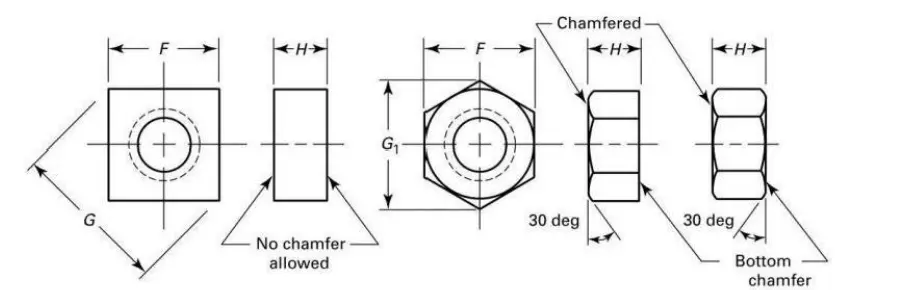
In international industrial trade and engineering applications, carbon steel fastening nuts have fixed standardized steel grades, which are the core basis for distinguishing product quality and performance. These standardized carbon steel fastener materials fully comply with global fastener industry specifications and cover most civil and industrial application scenarios. Standardized grading ensures unified product quality across different manufacturers, making international procurement and engineering matching more convenient and reliable for global buyers.
First, Q235 carbon steel is the most mainstream universal material for ordinary carbon steel fasteners. As a low-carbon structural steel, Q235 features stable chemical composition, good weldability and processability, and moderate mechanical properties. Nuts made of Q235 steel are cost-effective, corrosion-resistant under conventional atmospheric environments, and widely used in construction steel structures, ordinary mechanical equipment, and daily hardware facilities. It is the most widely adopted material for general-grade Carbon Steel Material Nut products.
Second, 4.8-grade carbon steel adopts optimized low-carbon steel raw materials, which undergo fine rolling and surface treatment processes. This grade of steel fastener has higher dimensional accuracy and more stable load-bearing performance than ordinary Q235 nuts, suitable for medium-load connection scenarios such as general machinery, automotive auxiliary parts, and pipeline fixing. It balances quality and cost, making it a cost-effective choice for bulk industrial procurement. Mass production and mature processing technology further stabilize its quality consistency for large-scale engineering projects.
Third, 8.8-grade and 10.9-grade medium-carbon steel materials are core materials for high-strength carbon steel fasteners. Made of 45# medium-carbon steel and subjected to strict heat treatment, these industrial nuts have ultra-high tensile strength and fatigue resistance. They are widely used in heavy machinery, engineering equipment, bridge structures, and high-pressure pipeline systems, meeting the high-strength connection requirements of key engineering parts. Thanks to their excellent comprehensive mechanical performance, these high-strength fasteners have become indispensable components in heavy industrial fields.
Key Performance Advantages of Carbon Steel Nut Materials
The sustained popularity of carbon steel fastening nuts in the global market stems from the unique performance advantages of their steel materials, which cannot be replaced by stainless steel or alloy steel nuts in many scenarios. First, carbon steel materials have extremely high structural stability, with uniform internal texture and stable mechanical properties, ensuring no loosening or fracture under long-term static and dynamic load conditions. Second, carbon steel fasteners have outstanding process adaptability, supporting various surface treatments such as galvanization, phosphating, blackening, and painting to enhance corrosion resistance and meet different environmental use needs.
In addition, carbon steel raw materials have abundant global supply and mature processing technology, which greatly reduces the production cost of carbon steel fasteners. Compared with stainless steel nuts, carbon steel fastening components have a more competitive price while maintaining reliable performance, making them the preferred choice for large-scale engineering procurement. Moreover, different grades of carbon steel materials form a complete product system, covering light, medium, and heavy load scenarios, realizing full-scene industrial coverage and greatly improving the flexibility of engineering design and component matching.
Common Application Scenarios for Carbon Steel Nuts
Thanks to diverse material grade options and excellent comprehensive performance, carbon steel fastening nuts are widely used in multiple industrial fields. In the construction industry, low-carbon and 4.8-grade carbon steel fasteners are used for fixing steel structures, building supports, and enclosure components, ensuring the stability of building structures. In the mechanical manufacturing industry, 8.8-grade and 10.9-grade high-strength carbon steel fasteners are applied to machine tool equipment, transmission parts, and engineering machinery, adapting to high-frequency vibration and high-load working environments.
In addition, carbon steel fastening components are also commonly used in pipeline engineering, automobile manufacturing, railway transportation, electrical equipment, and agricultural machinery. Different carbon steel material grades correspond to different use environments, realizing precise matching of product performance and engineering needs. For conventional atmospheric, low-temperature, and non-corrosive working environments, carbon steel fasteners can fully meet the service requirements and have higher cost performance than other material fasteners.
FAQs
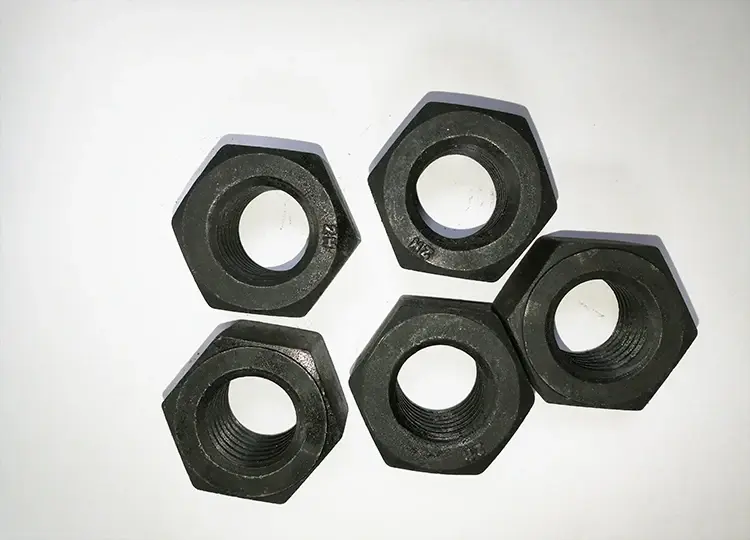
1. What is the difference between low-carbon and medium-carbon steel nuts?
Low-carbon steel nuts are mainly made of Q235 steel, with good toughness and ductility, not easy to break, suitable for light-load conventional connections, and low in cost. Medium-carbon steel nuts are mostly made of 45# steel, with high hardness and tensile strength after heat treatment, suitable for medium and high-load industrial scenarios, and have higher overall performance and price.
2. Do carbon steel nuts rust easily?
Bare carbon steel nuts are prone to oxidation and rust in humid and corrosive environments. However, through surface treatments such as hot-dip galvanizing, electro-galvanizing, and blackening, their corrosion resistance can be effectively improved, meeting the long-term use needs of outdoor and humid environments.
3. What international standards do carbon steel nut materials comply with?
Qualified carbon steel fastener nuts mainly comply with ISO 898-2:2022 mechanical property standard for steel fasteners and ASTM A563 standard for carbon and alloy steel nuts, covering dimensional tolerance, chemical composition, hardness, and load-bearing performance indicators to ensure global universal applicability.
4. Can carbon steel nuts replace stainless steel nuts?
In non-corrosive, conventional temperature and conventional load environments, carbon steel nuts can completely replace stainless steel nuts and have higher cost performance. But in strong corrosive, high-temperature, and high-humidity extreme environments, stainless steel nuts with better corrosion resistance are more suitable.
5. How to select the right carbon steel nut grade for engineering projects?
It is necessary to select according to equipment load, working environment, and service life requirements. Light-load fixed scenarios choose 4.8-grade low-carbon steel nuts; medium and heavy-load mechanical connections choose 8.8/10.9-grade medium-carbon steel nuts; special environments need to be matched with corresponding surface treatment processes.
Contact QinSteel for Custom Carbon Steel Material Nut Solutions
As a professional global supplier of carbon steel fasteners, QinSteel has more than ten years of production and export experience in steel nut products. We provide full-grade Carbon Steel Material Nut customization, standardized batch production, and one-stop supporting services, covering all mainstream carbon steel material grades and international standard specifications. Our steel fastener products strictly comply with ISO and ASTM international standards, with stable quality, precise dimensions, and reliable mechanical performance, which have been recognized by customers in Europe, America, Southeast Asia, and other global regions.
We support customized processing of special specifications, special surface treatments, and batch OEM/ODM services to meet the personalized needs of different engineering and procurement projects. Whether you need conventional standard carbon steel nuts or high-strength customized fastener products, we can provide professional technical consultation and high-quality matching solutions. For product inquiry, technical parameter consultation, sample application, and bulk order cooperation, please contact our professional business team via email: info@sxqinsteel.com. We will reply to your demand within 24 hours and provide the most cost-effective fastener procurement scheme.
References
[1] ISO 898-2:2022, Fasteners — Mechanical properties of fasteners made of carbon steel and alloy steel — Part 2: Nuts with specified property classes
[2] ASTM A563-15, Standard Specification for Carbon and Alloy Steel Nuts for General Structural and Mechanical Use
[3] GB/T 3098.2-2015, Mechanical properties of fasteners - Nuts
[4] EN 10269:2013, Steels for fasteners for use at elevated and low temperatures
Learn about our latest products and discounts through SMS or email