- English
- French
- German
- Portuguese
- Spanish
- Russian
- Japanese
- Korean
- Arabic
- Greek
- German
- Turkish
- Italian
- Danish
- Romanian
- Indonesian
- Czech
- Afrikaans
- Swedish
- Polish
- Basque
- Catalan
- Esperanto
- Hindi
- Lao
- Albanian
- Amharic
- Armenian
- Azerbaijani
- Belarusian
- Bengali
- Bosnian
- Bulgarian
- Cebuano
- Chichewa
- Corsican
- Croatian
- Dutch
- Estonian
- Filipino
- Finnish
- Frisian
- Galician
- Georgian
- Gujarati
- Haitian
- Hausa
- Hawaiian
- Hebrew
- Hmong
- Hungarian
- Icelandic
- Igbo
- Javanese
- Kannada
- Kazakh
- Khmer
- Kurdish
- Kyrgyz
- Latin
- Latvian
- Lithuanian
- Luxembou..
- Macedonian
- Malagasy
- Malay
- Malayalam
- Maltese
- Maori
- Marathi
- Mongolian
- Burmese
- Nepali
- Norwegian
- Pashto
- Persian
- Punjabi
- Serbian
- Sesotho
- Sinhala
- Slovak
- Slovenian
- Somali
- Samoan
- Scots Gaelic
- Shona
- Sindhi
- Sundanese
- Swahili
- Tajik
- Tamil
- Telugu
- Thai
- Ukrainian
- Urdu
- Uzbek
- Vietnamese
- Welsh
- Xhosa
- Yiddish
- Yoruba
- Zulu
Material Selection for ASME B16.20 Spiral Wound Gasket: Graphite vs. PTFE Fillers
Aug 25 2026
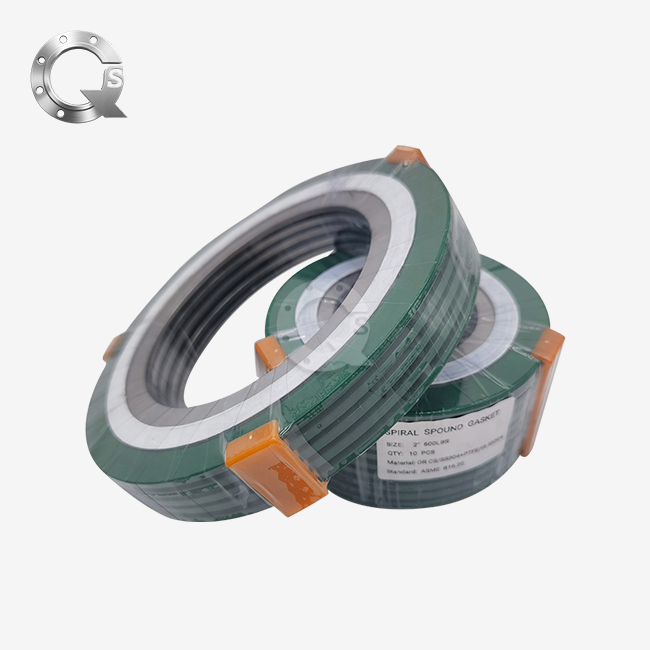
An ASME B16.20 Spiral Wound Gasket serves as a critical component in maintaining the integrity of piping systems, relying heavily on the correct selection of non-metallic filler materials to ensure a leak-free seal. In the complex world of industrial sealing, the metal winding provides the structural strength, but it is the filler material—typically Flexible Graphite or Polytetrafluoroethylene (PTFE)—that provides the actual barrier against fluid escape. Selecting the wrong filler can lead to catastrophic seal failure, costly downtime, and safety hazards. This technical guide explores the distinct properties, advantages, and limitations of Graphite and PTFE fillers to help engineers and procurement specialists make informed decisions for their specific applications.
The Role of the Filler in Semi-Metallic Gaskets
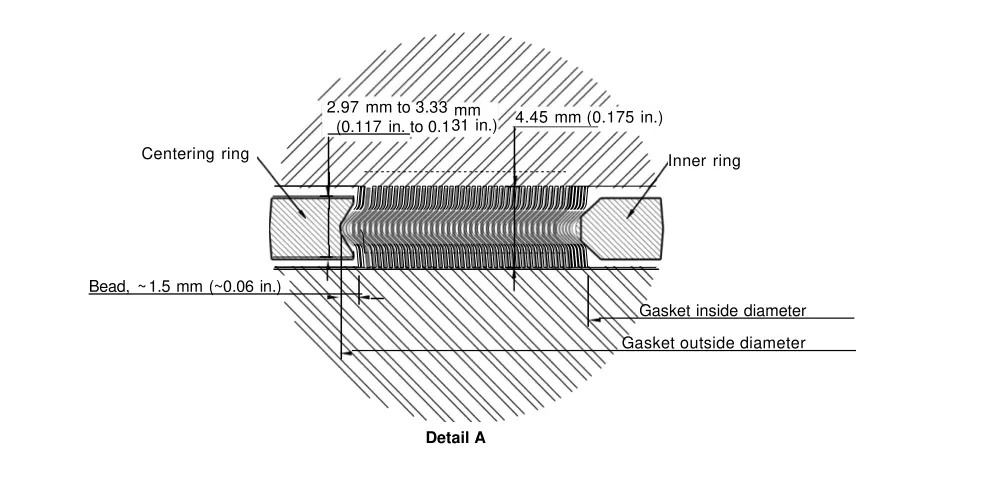
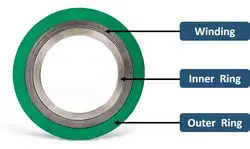
To understand the difference between the two materials, one must first understand the mechanics of a spiral wound gasket. These gaskets are constructed by winding a V-shaped metal strip and a softer non-metallic filler strip together in a helical pattern. The metal windings (usually Stainless Steel 304 or 316) provide resilience and structural integrity, allowing the gasket to recover after compression cycles.
The filler, however, is responsible for the initial seal. It must be compressible enough to fill the microscopic imperfections (waviness and roughness) of the flange faces. Furthermore, the filler must be chemically inert to the media flowing through the pipe. While the ASME B16.20 Spiral Wound Gasket standard dictates dimensions, pressure-temperature ratings, and marking requirements, it is the material compatibility of the filler that ultimately dictates the gasket's performance in the field.
Flexible Graphite: The High-Temperature Powerhouse
Flexible Graphite, often referred to as expanded graphite, is the most widely used filler material in the oil, gas, and petrochemical industries. It is derived from natural graphite flakes that are treated with strong acids to create an intercalated compound, which is then expanded by heat.
Thermal Capabilities
The primary advantage of graphite is its exceptional thermal stability. It can withstand extreme temperatures that would destroy other organic or polymeric materials.
· Cryogenic to High Heat: Graphite fillers are generally suitable for temperatures ranging from -240°C up to 450°C (and even higher in non-oxidizing atmospheres).
· Thermal Conductivity: Graphite has high thermal conductivity, which helps in dissipating heat across the flange connection, reducing thermal gradients that can warp flanges.
Chemical Resistance
Graphite is chemically inert to a vast majority of industrial solvents, fuels, and hydrocarbons. However, it has a specific vulnerability: strong oxidizing agents. In the presence of concentrated sulfuric acid, nitric acid, or chromic acid, graphite can oxidize rapidly, leading to seal failure. Therefore, for general refinery service involving hydrocarbons, steam, and inert gases, graphite is the superior choice.
Sealing Performance
Graphite offers excellent "creep relaxation" properties. Under load, it flows into flange serrations effectively. Its resilience ensures that even as the flange bolts relax over time due to thermal cycling, the graphite filler maintains sufficient stress to keep the seal intact.
PTFE (Polytetrafluoroethylene): The Chemically Inert Alternative
Polytetrafluoroethylene, universally known by the brand name Teflon™, is a synthetic fluoropolymer. When used as a filler in an ASME B16.20 Spiral Wound Gasket, PTFE offers a different set of characteristics, prioritizing chemical resistance over thermal endurance.
Universal Chemical Resistance
PTFE is virtually chemically inert. It is resistant to almost all industrial chemicals and solvents, including the strong oxidizing acids that attack graphite. This makes PTFE the material of choice for the chemical processing industry (CPI), particularly in applications involving:
· Concentrated Sulfuric Acid
· Caustic Soda
· Chlorine
· Complex pharmaceutical intermediates
Temperature Limitations
The Achilles' heel of PTFE is its temperature sensitivity.
· Upper Limit: PTFE begins to soften and lose mechanical strength around 260°C (500°F). Above this temperature, the material can degrade and release toxic fumes.
· Lower Limit: It remains flexible at cryogenic temperatures, making it suitable for LNG and liquid nitrogen applications, similar to graphite.
Cold Flow (Creep)
PTFE is susceptible to "cold flow" or creep. Under constant compressive load, PTFE tends to deform permanently and flow out from between the flange faces. To combat this, PTFE fillers in spiral wound gaskets are often modified or used in conjunction with inner rings to prevent extrusion into the pipe bore.
Comparative Analysis: Graphite vs. PTFE
When specifying a spiral wound gasket, the decision matrix usually comes down to Temperature, Chemical Compatibility, and Purity requirements.
|
Feature |
Flexible Graphite |
PTFE (Teflon) |
|
Max Temperature |
~450°C (842°F) in air |
~260°C (500°F) |
|
Min Temperature |
-240°C (-400°F) |
-200°C (-328°F) |
|
Chemical Resistance |
Excellent (except strong oxidizers) |
Superior (Universal resistance) |
|
Oxidizing Agents |
Not Recommended |
Highly Recommended |
|
Stress Relaxation |
Low (High Resilience) |
High (Prone to Cold Flow) |
|
Purity/Contamination |
Can leach chlorides/sulfur |
High Purity (Food/Pharma grade) |
The Purity Factor
In the food, beverage, and pharmaceutical industries, contamination is a major concern. Standard grades of graphite can contain trace amounts of sulfur and chlorides, which can leach into the process media. For these sanitary applications, PTFE is often mandated because it is non-toxic, tasteless, and does not contaminate the product.
ASME B16.20 Standards and Marking Requirements
The ASME B16.20 standard governs the manufacturing of these gaskets. It is crucial to note that the standard requires specific marking to identify the filler material, ensuring that the end-user installs the correct component.
According to the standard, the outer metal winding of the gasket must be color-coded to indicate the filler material:
· Yellow: Indicates a Flexible Graphite filler.
· White: Indicates a PTFE filler.
This visual check is the last line of defense against installation errors. A gasket intended for a high-temperature steam line (requiring Graphite) must never be swapped with a PTFE gasket, as the latter would rapidly fail under the heat. Conversely, using a graphite gasket in a line carrying concentrated nitric acid would result in rapid corrosion. Adherence to ASME B16.20 Spiral Wound Gasket color coding is mandatory for safety and traceability.
Installation Considerations for Optimal Performance
Regardless of whether Graphite or PTFE is chosen, the installation of the gasket is paramount.
1. Flange Finish: Spiral wound gaskets generally require a serrated spiral phonographic finish (125–250 micro-inch). A smooth finish may not allow the filler to bite into the flange, while a coarse finish might tear the filler.
2. Bolt Torque: Proper bolt torque is essential. PTFE requires lower seating stress compared to graphite. Over-torquing a PTFE gasket can crush the filler, causing it to extrude (cold flow) and lose its sealing force. Graphite, being more robust, can handle higher compressive loads.
3. Inner Rings: For both materials, but especially for PTFE and high-temperature graphite applications, an inner ring is recommended. The inner ring provides thermal protection to the winding element and prevents the filler from buckling into the pipe stream.
FAQs
Q1: Can I use a PTFE filled gasket for steam applications?
A1: Generally, no. While PTFE can handle low-pressure saturated steam at lower temperatures, it is not recommended for high-temperature steam. Graphite is the standard and safer choice for steam services due to its superior thermal stability.
Q2: Why is there an inner ring in some Spiral Wound Gaskets?
A2: An inner ring (or seal weld ring) serves two purposes: it prevents the gasket from buckling inward under compression and protects the windings from erosion by the process fluid. It is mandatory for Ring Type Joint (RTJ) facing and highly recommended for PTFE fillers to prevent extrusion.
Q3: Is Graphite filler conductive?
A3: Yes, flexible graphite is electrically conductive. If electrical isolation is required to prevent galvanic corrosion between dissimilar flange materials, a PTFE filler (which is an electrical insulator) or a specific isolation gasket kit should be used.
Q4: What is the shelf life of these gaskets?
A4: According to industry standards like ASME B16.20 and related storage guidelines, spiral wound gaskets do not have a defined shelf life if stored correctly in a cool, dry place away from direct sunlight and corrosive fumes. However, PTFE should be kept away from extreme heat sources during storage.
Q5: Can I substitute Graphite with PTFE if the temperature is low?
A5: Only if the chemical media is compatible with graphite. If the media is a strong oxidizing acid, you must use PTFE regardless of the low temperature. If the media is water or oil, graphite is usually preferred for its better mechanical resilience, even at low temperatures.
Contact QinSteel for Expert ASME B16.20 Spiral Wound Gasket Solutions
Navigating the complexities of material selection between Graphite and PTFE can be challenging, but using the correct ASME B16.20 Spiral Wound Gasket is vital for the safety and efficiency of your piping system. At QinSteel, we specialize in manufacturing high-quality sealing solutions tailored to your specific pressure, temperature, and chemical requirements.
Whether you need high-purity PTFE gaskets for the pharmaceutical industry or robust Graphite gaskets for refinery applications, our team ensures full compliance with ASME standards.
Contact us today for a quote or technical consultation:
Email: info@sxqinsteel.com
References
1. ASME B16.20-2017: Metallic Gaskets for Pipe Flanges - Ring-Joint, Spiral-Wound, and Jacketed.
2. ASME PCC-1-2019: Guidelines for Pressure Boundary Bolted Flange Joint Assembly.
3. Fluid Sealing Association (FSA): Gasket Handbook - Design, Materials, and Installation.
4. ASTM F1574: Standard Guide for Measuring the Creep Relaxation of Gasket Materials.
Learn about our latest products and discounts through SMS or email